Introduction
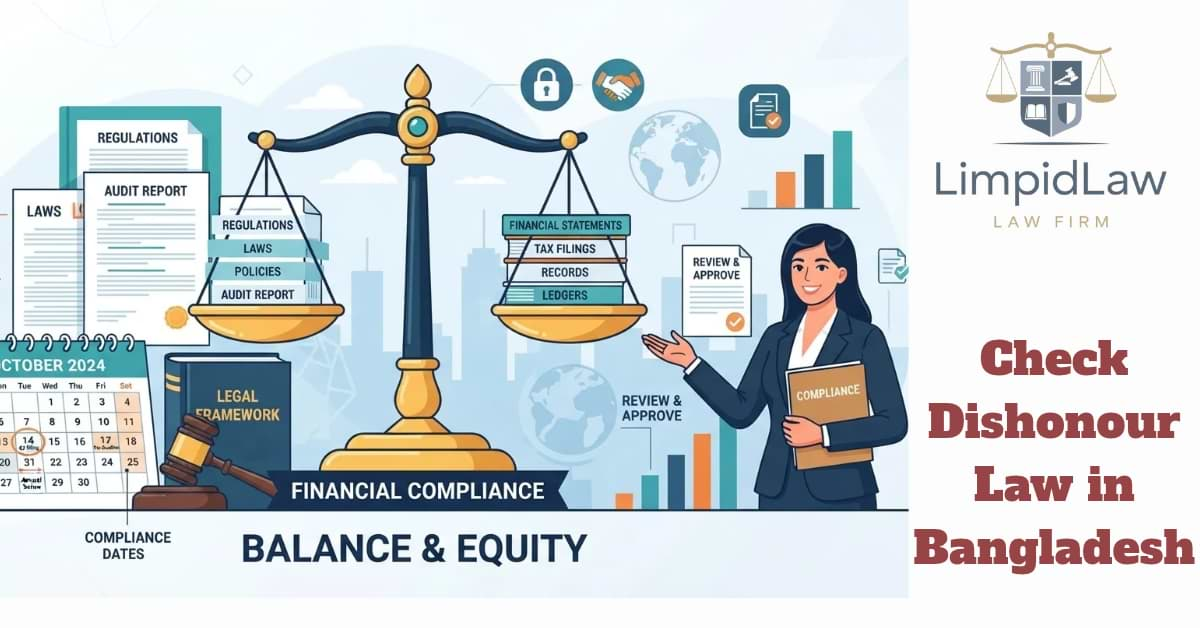
A cheque is often used to make payments in business transactions, property purchases, loans, and other financial dealings. But what happens when you deposit a cheque and the bank refuses to honour it because the account has insufficient funds? For the person expecting payment, this can create serious financial problems. Understanding the check dishonour law in Bangladesh can help you protect your money, take timely legal action, and avoid costly mistakes.
Bangladesh has specific legal provisions dealing with certain dishonoured cheques. However, not every returned cheque automatically results in criminal liability. The reason for dishonour, the nature of the transaction, and compliance with statutory deadlines all matter.
In this guide, we explain the relevant law, the steps you should follow after a cheque is returned unpaid, the possible punishment, and the practical remedies available to both the cheque holder and the person who issued it.
What Is Dishonour of a Cheque?
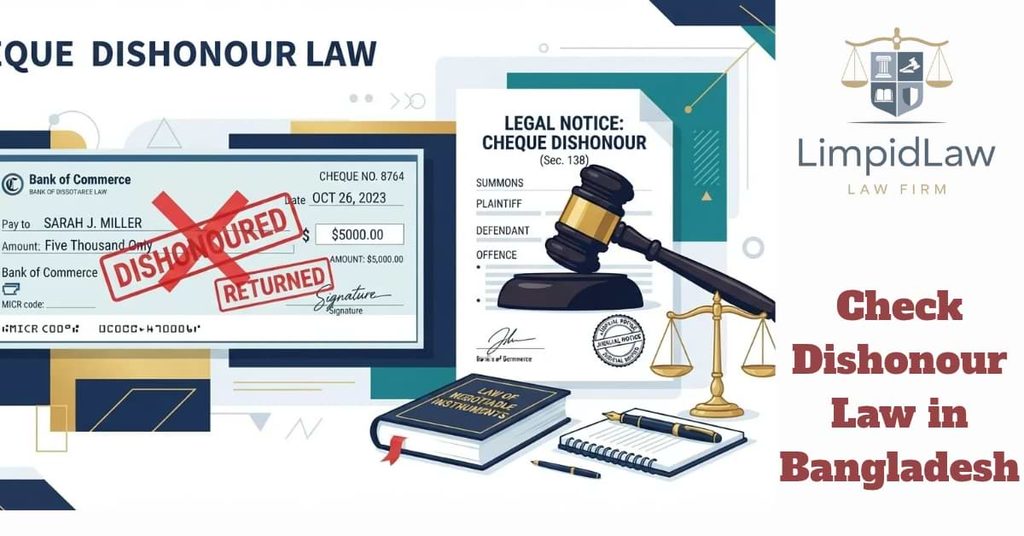
Simply put, what is dishonour of cheque? It occurs when a bank refuses to pay the amount stated on a cheque when it is presented for payment.
Common reasons include:
- Insufficient funds: The account does not have enough money to cover the cheque.
- Exceeding the agreed overdraft limit: The cheque exceeds the amount the bank has agreed to pay.
- Signature or account-related problems: The bank may return the cheque because of a signature mismatch, a closed account, or another banking issue.
It is important to distinguish between a cheque being returned for a technical or banking reason and one that may attract criminal liability. Section 138 of the relevant legislation specifically addresses dishonour due to insufficient funds or exceeding the agreed arrangement with the bank. Other reasons may require a different legal assessment. A bounced cheque isn’t just an awkward conversation. It can end up in a criminal court.
Which Law Governs Cheque Dishonour in Bangladesh?
The principal legislation is The Negotiable Instruments Act, 1881 i.e. N.I. Act, particularly Section 138, which deals with certain cheques returned unpaid because of insufficient funds or an excess over the agreed banking arrangement.
In practical terms, the law provides a legal remedy where a cheque issued for payment of money is dishonoured and the statutory conditions are satisfied. It also establishes specific requirements regarding presentation of the cheque, written notice, and the opportunity to make payment.
For anyone dealing with unpaid cheques, understanding these requirements is essential. A genuine claim may face difficulties if the required procedure or deadlines are overlooked.
You can consult the official text of Section 138 of the Negotiable Instruments Act, 1881 for the statutory provisions.
There’s one fresh development worth knowing. According to the government’s law portal, the Negotiable Instruments (Amendment) Act, 2026 (Act No. LXV of 2026) rewrote section 141(c). Cases involving cheques above Tk. 5 lac now go to a Joint Sessions Judge (or Metropolitan Joint Sessions Judge), while all other cases are tried by a Magistrate of the first class. In other words, the size of the cheque now decides which court hears your case.
What Are the Legal Requirements for Filing a Cheque Dishonour Case?
Under Section 138, a cheque holder must satisfy the applicable statutory conditions before pursuing a criminal complaint. The principal requirements are:
- Present the cheque within the prescribed period. The cheque must be presented within six months from its date or within its validity period, whichever is earlier.
- Send written notice within 30 days. After receiving information from the bank that the cheque has been returned unpaid, the payee or holder in due course must issue a written demand for payment within 30 days.
- Allow 30 days for payment. The cheque drawer must be given 30 days from receipt of the notice to pay the demanded amount.
- File the complaint within the applicable limitation period. If payment is not made within the statutory period, the complainant must initiate proceedings within the prescribed time.
These requirements are cumulative. Missing a deadline or failing to establish proper service of the notice may seriously affect the case.
The applicable statutory method of serving notice includes personal delivery, registered post with acknowledgment due to the drawer’s usual or last-known address in Bangladesh, or publication in a widely circulated daily Bangla national newspaper, as provided by Section 138(1A).
Because calculating the deadlines can be complicated, it is sensible to consult a lawyer as soon as the bank returns the cheque.
Step-by-Step: How to Take Legal Action After a Cheque Is Dishonoured
If you receive a returned cheque, avoid unnecessary delays. The following steps provide a practical starting point.
Step 1: Collect the Bank’s Return Documents
Obtain the original cheque, the bank’s return memo or dishonour slip, and relevant deposit records. Keep copies of any documents showing the transaction that led to the cheque being issued.
Step 2: Preserve Evidence of the Debt
Keep the agreement, invoice, loan acknowledgment, correspondence, receipts, or other documents that establish the underlying transaction. These materials may help demonstrate the basis of your claim.
Step 3: Send a Legal Notice
A properly prepared legal notice for dishonour of cheque should demand payment of the cheque amount and comply with the statutory requirements. Make sure the notice is issued within the applicable 30-day period and served through a legally permitted method.
Keep the postal receipt, acknowledgment card, delivery records, newspaper publication, or other relevant evidence of service.
Step 4: Wait for the Statutory Payment Period
The drawer has 30 days from receipt of the notice to make payment. If the full amount is paid within that period, the statutory basis for proceeding under Section 138 on that dishonour may not arise.
Step 5: Consider Filing a Complaint
If the drawer fails to pay within the prescribed period, the cheque holder may file a complaint for dishonour of cheque, subject to the statutory requirements and limitation period.
The complaint should be supported by relevant documents and evidence. A lawyer can assess the proper forum, the complainant’s legal standing, the applicable deadlines, and any procedural issues.
What Is the Punishment for Dishonour of a Cheque?
The punishment for dishonour of cheque under Section 138 can include:
- Imprisonment for a term of up to one year;
- A fine of up to three times the amount of the cheque; or
- Both imprisonment and a fine.
The actual sentence depends on the circumstances and the court’s decision. The maximum statutory punishment is not necessarily the punishment imposed in every case.
Section 138 also provides that, when a fine is realised, an amount up to the face value of the cheque, to the extent covered by the fine, is payable to the holder. If the cheque amount remains wholly or partly unrecovered, the holder retains the right to pursue the claim through a civil court under the statutory provision.
Criminal Proceedings vs. Civil Recovery: What Is the Difference?
An important point in cheque dishonor law in Bangladesh is that criminal proceedings and recovery of money are related but distinct matters.
| Issue | Criminal proceedings (Section 138) | Civil recovery suit |
| Goal | Punish and recover | Recover money only |
| Legal basis | Section 138 and related provisions, where applicable | The underlying debt, contract, and relevant civil law |
| Deadline | Tight (one month for the complaint) | Governed by general limitation rules |
| Possible outcome | Conviction, imprisonment, fine, or both | A decree or other appropriate civil remedy |
| Pressure on drawer | High (possible jail and fine) | Moderate |
| Speed | Often faster in practice | Can be slower |
| Procedure | Strict, with a mandatory notice | More flexible |
| Issue | Criminal proceedings | Civil recovery |
| Evidence | Compliance with statutory requirements and proof of the offence | Evidence establishing the debt or contractual obligation |
A successful criminal case does not always mean that the entire outstanding amount has been recovered. Depending on the circumstances, a separate civil remedy may remain available.
This distinction is particularly important in commercial transactions, where the cheque may represent only part of a larger debt.
Important Legal Considerations for Businesses and Individuals
The rules governing dishonour of cheque in banking law can affect both individuals and businesses. Before issuing or accepting a cheque, consider the following precautions:
- Verify that the cheque details are correct and that the account has sufficient funds.
- Preserve written evidence of the transaction and the purpose for which the cheque was issued.
- Keep the original cheque and bank records safe after dishonour.
- Do not assume that a verbal promise to pay extends the statutory deadlines.
- Obtain legal advice promptly if a cheque is returned unpaid or you receive a statutory demand notice.
Where a company issues a cheque, additional questions may arise concerning the company’s liability and the responsibility of individuals in charge of its business. Section 140 of the Act addresses offences by companies, subject to the statutory conditions and applicable defences.
Practical Insights: Lessons From the Courts
A few patterns keep showing up in judgments:
- Presumption works for the payee. Courts rely on section 118(a), which assumes every negotiable instrument was made for consideration. This presumption is rebuttable, meaning the drawer can challenge it. The drawer needs real evidence, not just denial.
- Paperwork wins cases. The cheque, the bank memo, the notice and proof of delivery form your core evidence.
- Procedure beats passion. Judges look at whether you followed each step. A strong story with a weak notice can still lose.
Frequently Asked Questions (FAQs)
Q. Is a bounced cheque a criminal offence in Bangladesh? Or, Is issuing a dishonoured cheque a criminal offence in Bangladesh?
A. Yes. Under section 138, a cheque returned unpaid for insufficient funds can lead to a criminal case, provided the legal steps are followed.
Q. How long do I have to send a legal notice after a cheque bounces or is dishonoured?
A. The written demand notice must generally be issued within 30 days of receiving information from the bank that the cheque has been returned unpaid.
Q. How many days does the cheque issuer get to pay after receiving the notice? Or,
A. The drawer has 30 days from receipt of the notice to pay the demanded amount under Section 138. If they pay in full within this window, no offence is made out.
Q. What is the time limit for filing a cheque dishonour case?
A. The complaint must be filed within one month from the date on which the cause of action arises, subject to the applicable statutory provisions. Because the date depends on the notice and payment timeline, calculate it carefully with legal assistance.
Q. Can I recover my money after filing a cheque dishonour case?
A. A criminal proceeding may lead to a fine and payment to the cheque holder as provided by law. If some or all of the cheque amount remains unrecovered, Section 138(3) preserves the holder’s right to establish the claim through a civil court.
Q. Can a cheque be dishonoured even when the account has money?
A. Yes. A bank may return a cheque for reasons other than insufficient funds, such as a signature mismatch or account-related issue. Whether that return gives rise to a criminal case under Section 138 depends on the statutory grounds and the facts.
Q. Can a company be prosecuted for issuing a dishonoured cheque?
A. Yes. Section 140 addresses offences committed by companies and the potential liability of persons responsible for the company’s business, subject to the provision’s conditions and applicable defences.
Q. What should I do if someone files a cheque dishonour case against me?
A. Do not ignore the notice or court summons. Preserve the cheque-related documents, bank statements, transaction records, and proof of any payment. Consult a lawyer promptly to assess the allegations, procedural compliance, available defences, and relevant deadlines.
Q. Can the drawer go to jail?
A. Yes, up to one year, though recent rulings show courts often prefer a fine linked to the cheque amount.
Q. Does a post-dated cheque count?
A. Yes, once it’s presented on or after its date and within its validity period and then dishonoured.
Q. Can I file a civil case instead?
A. Yes. A recovery suit is available, and some payees pursue both routes with legal advice.
Q. Which court hears my case now?
A. Following the 2026 amendment, cheques above Tk. 5 lac go to a Joint Sessions Judge, while smaller ones go to a Magistrate of the first class.
Q. Can the convicted person appeal?
A. Yes, but only after depositing at least 50% of the cheque amount.
Q. Do I need a lawyer?
A. It’s strongly advisable. The notice wording and timing are technical, and mistakes can be fatal to your case.
Conclusion
A dishonoured cheque can disrupt business, delay debt recovery, and create unnecessary financial pressure. Fortunately, Bangladesh law provides remedies when the relevant legal requirements are satisfied.
The key is to act promptly, preserve evidence, issue a valid notice within the prescribed time, and follow the proper procedure. Whether you are trying to recover unpaid money or have received a demand notice yourself, understanding your legal position early can help you avoid preventable mistakes.
If you are dealing with a returned cheque, consult a lawyer to review the documents, calculate the applicable deadlines, and determine the most appropriate legal remedy for your circumstances. If you’re the payee, act quickly and document everything. If you’re the drawer, treat a cheque like cash, because the law largely does.
The content of this blog is for knowledge or information sharing purpose only and may not be relied on as legal advice. In terms of getting any legal help we always strongly advise to contact a professional lawyer. For professional legal help you can call +8801753178887 (whatsapp) or contact here.
Written By:
Sheikh Saiful Islam Rajib
Advocate, Supreme Court of Bangladesh